Santa Rings the doorbell

A day at the river
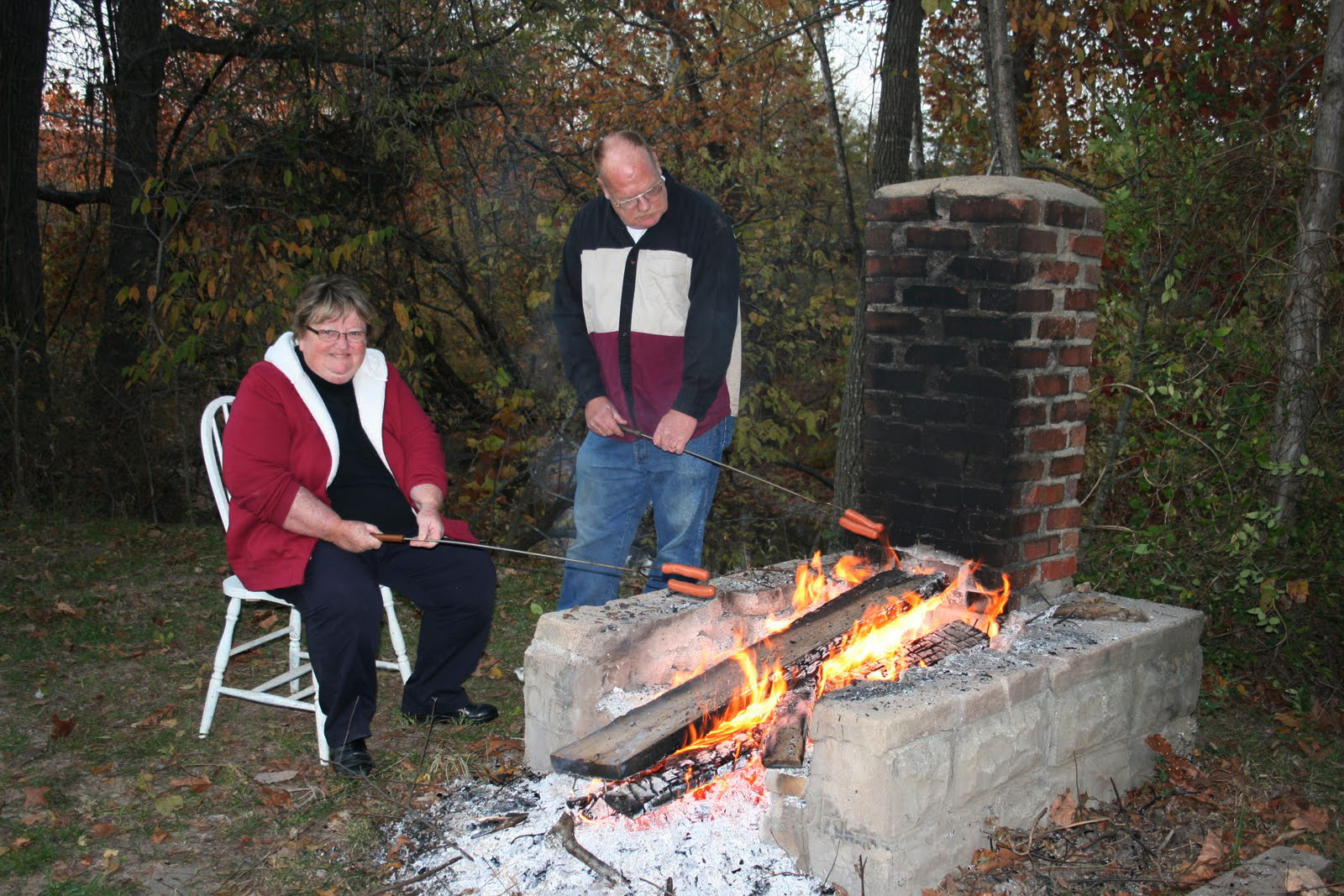
I find happiness sitting by a campfire along the banks of the James River. Roasting hot dogs on a long stick. Perfection is brown but not burned Winnie. Potato chips, potato salad, fresh red tomatoes, mustard, pickle and relish. After sharing stories with family and friends a roasted marsh mellow makes the day or night perfect.

In the Ozarks as a youth I remember swimming at the Rockaway Beach town famous during the 1960’s. I decided it would be fun to take my friend to get pizza at the Cellar Restaurant . The Pizza Cellar has looked the same for 50 years. You walk down steep steps to a old cellar that serves good thin crust pizza.
Rockaway, which is hailed as the first resort community on Lake Taneycomo. As one advertisement in 1921 put it: “This charming crystal lake is 25 miles long. It is only 50 miles south. The lake is easily accessible. It is a great natural playground for Springfield people.” The summer nights are always cool and delightful, without mosquitoes. Many small cabins were built to accommodate the summer visitors.
During the 1960’s plans were made to build Table Rock Dam on the White River. This caused the water to become very cold. The town would go from very few inhabitants to, on weekends, 5,000. One summer July 4th, 1965, there was a riot. Rowdy teenagers on Harley Davidson motorcycles caused an out of control party.
Nearly 200 individuals faced arrest and charges. The charges included a variety of crimes like disturbing the peace and contributing to the delinquency of minors. They also included possession of liquor, violation of traffic laws, and indecent exposure.
Now most people go to Table Rock Lake while Rockaway beach is used for trout fishing. The little cabins stay. They bring back many memories of life before the White River turned into a large lake.
Took a scenic drive to the small town of Rockaway Beach, Missouri. Growing up in the Ozarks as a youth I remember swimming at the Rockaway Beach town famous during the 1960’s. I decided it would be fun to take my friend to get pizza at the Cellar Restaurant . The Pizza Cellar has looked the same for 50 years. You walk down steep steps to a old cellar that serves good thin crust pizza.
Rockaway, which is hailed as the first resort community on Lake Taneycomo. As one advertisement in 1921 put it: “This charming crystal lake is 25 miles long. It is only 50 miles south. The lake is easily accessible. It is a great natural playground for Springfield people.” The summer nights are always cool and delightful, without mosquitoes. Many small cabins were built to accommodate the summer visitors.
During the 1960’s plans were made to build Table Rock Dam on the White River. This caused the water to become very cold. The town would go from very few inhabitants to, on weekends, 5,000. One summer July 4th, 1965, there was a riot. Rowdy teenagers on Harley Davidson motorcycles caused an out of control party.
Nearly 200 individuals faced arrest and charges. The charges included a variety of crimes like disturbing the peace and contributing to the delinquency of minors. They also included possession of liquor, violation of traffic laws, and indecent exposure.
Now most people go to Table Rock Lake while Rockaway beach is used for trout fishing. The little cabins stay. They bring back many memories of life before the White River turned into a large lake.


List your top 5 grocery store items.
Distilled water for the CPAP machine. First item to grab after a flight.
12 pack of coke.
Some type of sweet bread for the midnight snack.
Oatmeal in case I want to be healthy.
Red diamond unsweet tea.
My dad is the one who has positively impacted my life. He showed kindness to everyone. Would help anyone who needed his help. Never gave up until the project was finished. He had time to smell the roses and notice the small things in life.

If you met my dad, you would like him. He was kind, funny, devoted, and persistent. He enjoyed tinkering with things and improving them. He would cook a good pork steak or get a mower running in no time at all. He even invented his own way of spelling words. His name was Paul, but many people called him P.D. My middle name came from my dad. My name is Paulette. My looks come from the Christian side, but my personality is Nevatt. He was a good writer, taking that talent from his mom, Alma. Grandma would write poems for the newspaper, and Dad wrote letters to the editor.

As I grew up, I increasingly adopted his mannerisms and habits. He had an interesting way of seeing the world. His view was equal parts practical and gentle. It was as if every action, no matter how small, was worth doing right. This was true in different situations. I remember mixing small batches of concrete on a chilly Saturday morning to replace the back path to the garage. In those moments, I found myself wanting to be just like him. I wanted to inherit not only his quirks but also the steadfastness beneath them.
I remember how his mind was always at work. One day, he’d be proposing speed bumps for Glenstone to slow the rush of traffic. The next day, he’d be crafting illustrated cards for the grand kids in Grande Isle, Louisiana. Receiving one of his cards always felt like a special connection to his playful spirit. It was a small package of joy that traveled across miles. He was curious about how things worked. This curiosity extended to the stacks of the public library. There, he would lose track of time while exploring new ideas and concepts. Sometimes the librarian would gently tap him on the shoulder, reminding him that the library was about to close. But even then, he would leave with a spark in his eye and his mind buzzing with possibilities. He delighted in exchanging letters with long-lost relatives. At Christmas, he also wrote to his World War II buddies. This kept connections of family and friends alive. I can still picture Dad surrounded by motors, transistors, and soldering irons. His workbench was a landscape of possibility. Problems became puzzles to solve there. Those memories linger with me. Their warmth constantly reminds me of the incredible mark he left on my personality. He achieved this through his unique projects and acts of connection.
His faith was always strong. As a young boy, my Grandma took him to church. One time, Dad invited the church members to join in a picnic at our river place on the James River. He even ordered a portable potty to be available for those who need to use it. Some kids who delivered the toilet painted a lady on the inside door. Dad went and bought white spray to cover up the artwork.
Dad would label everything. Mom bought a new cook stove for the rental house. She used a marker to write on the back and front. This helped people know what the icons meant. Mom made Dad uninstall his directions.
My grandpa liked to dabble in real estate, so the family moved often, which Dad disliked. Dad looked forward to not having to move his family when he became a father. We only moved once during our childhood. Our new house was one block from our old house.
Dad worked as an installer for Western Electric, known for solving challenging problems, across Arkansas, Kansas, and Missouri. Dad was the first Nevatt not to become a printer. His great-grandfather came to America to continue the printing trade. Great-grandfather’s Father, Issac, brought his printing press from England to America. Issac first worked in Hannibal, Missouri, with Mark Twain on the local newspaper. One day, a young boy walked down Jefferson Street. The door was open. He saw a man working with wires. So, he asked if they were hiring. That marked the beginning of a forty-year career in the telephone industry. Dad was drafted into the Army’s Signal Corps on July 7, 1942, at the age of 21. He served our country working on telephone equipment in Africa and Italy. After World War II, he returned to Western Electric.
Dad didn’t like to have his day planned for him. He just wanted to get up in the morning and decide what he would accomplish that day. He would be in the middle of a project. Mom would say, “Paul, it’s about time to get ready to…”. I live by the same philosophy. Sometimes the best things in life happen.
“Behind every great daughter is a truly amazing dad.”

If you met my dad, you would like him. He was kind, funny, devoted, and persistent. He enjoyed tinkering with things and improving them. He would cook a good pork steak or get a mower running in no time at all. He even invented his own way of spelling words. His name was Paul, but many people called him P.D. My middle name came from my dad. My name is Paulette. My looks come from the Christian side, but my personality is Nevatt. He was a good writer, taking that talent from his mom, Alma. Grandma would write poems for the newspaper, and Dad wrote letters to the editor.

As I grew up, I increasingly adopted his mannerisms and habits. He had an interesting way of seeing the world. His view was equal parts practical and gentle. It was as if every action, no matter how small, was worth doing right. This was true in different situations. I remember mixing small batches of concrete on a chilly Saturday morning to replace the back path to the garage. In those moments, I found myself wanting to be just like him. I wanted to inherit not only his quirks but also the steadfastness beneath them.
I remember how his mind was always at work. One day, he’d be proposing speed bumps for Glenstone to slow the rush of traffic. The next day, he’d be crafting illustrated cards for the grand kids in Grande Isle, Louisiana. Receiving one of his cards always felt like a special connection to his playful spirit. It was a small package of joy that traveled across miles. He was curious about how things worked. This curiosity extended to the stacks of the public library. There, he would lose track of time while exploring new ideas and concepts. Sometimes the librarian would gently tap him on the shoulder, reminding him that the library was about to close. But even then, he would leave with a spark in his eye and his mind buzzing with possibilities. He delighted in exchanging letters with long-lost relatives. At Christmas, he also wrote to his World War II buddies. This kept connections of family and friends alive. I can still picture Dad surrounded by motors, transistors, and soldering irons. His workbench was a landscape of possibility. Problems became puzzles to solve there. Those memories linger with me. Their warmth constantly reminds me of the incredible mark he left on my personality. He achieved this through his unique projects and acts of connection.
His faith was always strong. As a young boy, my Grandma took him to church. One time, Dad invited the church members to join in a picnic at our river place on the James River. He even ordered a portable potty to be available for those who need to use it. Some kids who delivered the toilet painted a lady on the inside door. Dad went and bought white spray to cover up the artwork.
Dad would label everything. Mom bought a new cook stove for the rental house. She used a marker to write on the back and front. This helped people know what the icons meant. Mom made Dad uninstall his directions.
My grandpa liked to dabble in real estate, so the family moved often, which Dad disliked. Dad looked forward to not having to move his family when he became a father. We only moved once during our childhood. Our new house was one block from our old house.
Dad worked as an installer for Western Electric, known for solving challenging problems, across Arkansas, Kansas, and Missouri. Dad was the first Nevatt not to become a printer. His great-grandfather came to America to continue the printing trade. Great-grandfather’s Father, Issac, brought his printing press from England to America. Issac first worked in Hannibal, Missouri, with Mark Twain on the local newspaper. One day, a young boy walked down Jefferson Street. The door was open. He saw a man working with wires. So, he asked if they were hiring. That marked the beginning of a forty-year career in the telephone industry. Dad was drafted into the Army’s Signal Corps on July 7, 1942, at the age of 21. He served our country working on telephone equipment in Africa and Italy. After World War II, he returned to Western Electric.
Dad didn’t like to have his day planned for him. He just wanted to get up in the morning and decide what he would accomplish that day. He would be in the middle of a project. Mom would say, “Paul, it’s about time to get ready to…”. I live by the same philosophy. Sometimes the best things in life happen.
“Behind every great daughter is a truly amazing dad.”
The Story of the 3196th Signal Service Company, 1941–1945, in the United States, North Africa, and Italy.
Paul H. Izor, 2017
PROLOGUE
This story is primarily based on fact. However, it should be read as a novel. It is a work of fiction derived from anecdotes and remembrances recounted more than 50 years after the event. The fresh-faced boys of 1942 shared memories. These memories were spiced with perhaps a bit of flair. They joined for nine years of reunions. These reunions began in 1994. Those memories, faded with the passage of time, fill in some of the details. The Beacon newspaper was published in Leghorn, Italy, from 1944 to 1945. It is one of the very few weekly written records of events. These records are apart from official military records. It is a rare peek into the daily life of a WWII GI. The author is grateful to the many families who contributed remembrances of stories told to them over the years. Many of those had been put to paper by Lloyd F. (Frank) Brisk for the reunions. Additionally, Bill Loader’s and Jack Davis’s stories, poems, and Saga were instrumental. They shaped the format of each reunion. Their works also helped prepare this version of the larger story of the 3196. Each Reunion Souvenir brochure contained excerpts from Peter Disney’s articles in the Beacon, written with his enviable writing style and clarity, together
With the outstanding graphic arts depictions of Bill Loader. I am in awe of Bill Loader’s writing ability in the 1997 brochure, “They Took the B Tickets back.” It recounts first-person memories of so many who endured the collision of Uruguay. Considerable use was made of the invaluable Beacon publication. This publication is titled All Present and Accounted For and is by Peter Disney and Bill Loader (1945). To say the least, Pete passed away too early, in 1949, from an infection. I have mentioned several names of men from the unit and included representative photographs of the events. Unfortunately, the number of available photos was limited, and not all men could be included by name. Also, I did not footnote each reference. I did not acknowledge the source of each contribution to this book. They were invaluable to its writing. Importantly, the example, inspiration, and support of my father, Cpl. Herman Izor, together with Mom, Marilyn (Zaebst) Izor, and our extended family, cannot be overstated. For them, I am immensely grateful. Paul Izor Mount Hermon, California
Dedication Herman V. Izor, Jr.1941
Chapter I, June 1941: Hitler was marching his troops across Europe. One country after another had surrendered to his massive, brutal military, and Great Britain was in his sights. Bombs rained down on London. Tensions were high. The Japanese were at war with China. They took over the South Pacific, island by island. Mussolini’s fascists joined forces with the Nazis. They invaded the Soviet Union. The world was at war as America fought to recover from the Great Depression. Young, Class of 1941 graduates sought employment, married, and started families. Some entered the military as Reservists, while others served as active-duty personnel. In considerable measure, America viewed the events in Europe as a local conflict. They saw the distant war between Japan and China as well-contained. That changed with the bombing of Pearl Harbor on December 7, 1941. Enlistment into the military increased significantly. Many young men wanted to join the fight.
Chapter II, December 1941: In a surprising twist, American forces took an unexpected action. They were sent to Europe immediately, rather than launching a counterattack against the Japanese. British forces in Gibraltar and Casablanca faced threats from Italian and Nazi forces. Meanwhile, London remained under siege from the Nazi Luftwaffe. Mainland Europe was entirely under Nazi control and well-defended with men and equipment. Allied forces looked toward North Africa as a soft entry point. In an age when radio communication was still in its infancy, the telegraph and telephone were well-developed. These technologies had been perfected since the late 1800s. The reliable transmission of battlefield information was crucial to the success of the Allies. American business and industry already had civilian-trained personnel for such a job. Bell Laboratories provided training to enlisted military personnel and to promising high school graduates seeking employment. The War Department turned to the American Telephone and Telegraph Company, now modernly known as AT&T. The E-3 Training School in Dayton, Ohio, provided a four-month, intensive course in the fundamentals and procedures of electricity.
Chapter III,1942: It was unusual to see a young man on the street. So many young men had already enlisted or were drafted. It seemed like only 18 or 19-year-olds were left behind. While officers and enlisted men went off to fight, recruiters for the U.S. Army Signal Corps held meetings at AT&T offices across America. Communication would be a key element of the war effort. Local subsidiaries of the AT&T Bell System introduced the war effort to these young men. Companies like Ohio Bell, Illinois Bell, New York Bell, and South-Central Bell participated, among others. These, too, could serve their country. They would enlist directly into the Signal Corps. They would receive regular Army pay. Upon discharge, they would be credited with service toward company retirement. They would be deployed with other telephone company personnel. That seemed so much better than being drafted into the infantry and being sent to the front lines. Recruits were assigned a serial number as part of the Enlisted Reserve. They resumed their positions to further their training and accumulate experience, remaining on standby until summoned for active duty.
Chapter IV, 1942: The call came. The 5th Army was about to invade North Africa in Morocco and Algeria, and troops and support would be required. Report to your assigned induction center at the nearest Army Base. The young men would have one more Christmas at home. Uniforms, a barracks bag, and a cardboard box were issued to each soldier. Dogs’ tags were punched out on a Graphotype machine. The box was to mail their civilian clothes back home. If it wasn’t issued to you by the Army, you didn’t need it anymore. Then began the waiting. One day. Two days. A week went by. It was the Army. Rush, then wait.. Then orders came—board trains for Camp Crowder, Missouri. The 845th Signal Battalion had been formed. From New York to California and Minnesota to Alabama, they all went to Camp Crowder, Missouri. Young men had been teenagers just a year or two earlier. They were named Beaver, Buddy, Shorty, Rebel, Buck, Champ, Red, Vic, Tex, Dutch, Gerry, Ripper, Smitty, Tweedy, or Wolf. Now, they are called Soldier or Private. Some are called Corporal or even Sergeant. A few have become Lieutenant. ROTC or time in the Reserves, plus college, can lead to a rank or even an officer’s commission.

Chapter V Winter, 1942-1943: Troop trains were not designed for comfort. The stripped-out passenger cars were jammed with four men, plus their barracks bags, per seat. Day gave way to night, and morning arrived. Some tried to sleep on the floor during the non-stop trip. A boxcar was fitted with a charcoal fire over a steel plate to heat C-rations for the slim meals available. The men offloaded the train into Army six-by-six trucks for the trip to camp. In the dead of the Missouri winter, sleeping in tents, many got the Crowder Croup, and 8 of the men were hospitalized. Herman Izor was one of them and never got his Basic Training.
Nevertheless, after 14 days at Camp Crowder, these recruits joined the 845th Signal Service Battalion. Lt. Gerrit Klop, freshly out of Officer Candidate School, was in command of Company “A”. Fifty-five % of the men were experienced technicians from the nation’s telephone and telegraph companies. 20% were recruits trained at Signal Corps schools. The rest were vehicle mechanics, drivers, cooks, supply personnel, and administrative staff. Orders were issued to depart for Fort Dix, New Jersey, for an overseas deployment. Another week-long train ride from Missouri to New Jersey was no better than the first trip.
Thousands of troops were being staged for loading onto troop ships. Rows of squad tents stretched endlessly. Several feet of cold, wet snow covered the ground. Men had rigged all sorts of makeshift heaters in their tents, trying to keep from freezing. Coal oil, gasoline, or any other fuel that could be burned was consumed. 24-hour Fire guard duty was implemented in 24-hour shifts to prevent the whole camp from being set ablaze.
When ordered to break camp, thousands of soldiers were transported by truck and bus to the Brooklyn, New York, Port of Embarkation. 1st Lieutenant Feris H. Pratt assumed command of Company “A”. The war put heavy demands on overseas troop and supply shipping. Rivaled only by the Port of San Francisco, New York had become an immense system of housing, staging, warehouses, docks, and ships working around the clock. Cargo ships and cruise liners were commissioned and refurbished. Pipe rack bunks, six men high, with sheets of heavy canvas stretched between, consumed every available space on the ship. This would be home for the month-long trip to Europe. The 845th Battalion was assigned to North Africa—destination Casablanca.
Chapter VI: The S.S. California was a luxury cruise ship operating between the U.S. West Coast and South America. However, in 1938, it was converted to cargo operations and renamed the S.S. Uruguay. In 1942, she was outfitted to carry troops, and a hospital was installed on board. On February 8, 1943, the 845th boarded for deployment. Now, Capt. Feris Pratt was in command with Lt. Gerry Klop and the rest of the unit, comprising 246 men. The 575-foot-long ship was holding a total of 5,000 troops and literally tons of equipment. Uruguay joined a convoy of other troop ships along with the U.S. Navy, providing escort protection.
The North Atlantic was thick with German U-boats, and the threat was a constant concern. The troopships, tankers, and cargo ships would form a zig-zag pattern, while destroyers and anti-submarine ships kept a lookout. In total, the convoy consisted of nearly 50 ships. Three days out of New York, on February 12, 1943, at 4:00 a.m. local time, the S.S. Uruguay, zigzagging through the darkness of the North Atlantic, was rammed just aft of the bridge by the oil tanker USS Salamonie, which had suffered a loss of steering. The tanker’s bow made a 70-foot hole in Uruguay’s hull, opening seven decks and penetrating her hospital, killing 13 soldiers and injuring 50. Forty soldiers were listed as missing. The impact had thrown some. Some had grabbed life vests and jumped into the water, fearing that the ship would sink. Seven soldiers would be buried in Bermuda.
Sgt. Ed Smith of the Signal Company was injured himself but stayed below decks, commanding the evacuation. The Army troops panicked, thinking that it was a German torpedo attack. The ship was flooding, and electrical power was lost, plunging the ship into darkness. The troops were ordered through flooding and damaged compartments, up the ladders and onto the decks, clutching Mae West life preservers, preparing to go overboard into the cold, dark waters if the ship should sink. Four minutes’ survival in the wintry water was about all they could hope for. Ballast water was shifted between Uruguay’s tanks to create a 34-degree high list and raise some of the open decks above the waterline. Uruguay’s crew contained the damage by building a temporary bulkhead. The nearest port was Bermuda, 800 miles away. As the Uruguay steamed ahead at a snail’s pace, it spewed barracks bags and other debris out of its hull gash. It was a sitting duck for U-boats. The troops remained on deck using their life preservers as pillows, and three days later, they safely reached harbor in Bermuda: one injured soldier, Sgt. Cecil Davis, along with his entire bed and most of his toiletry articles, was thrown from the Uruguay sick bay and landed on the tanker’s deck. With only a scrape and a cut on his face, but alive, he was not discovered until the morning, when the Salamonie had also changed course to Bermuda for repairs.

Chapter VII February 15, 1943: The island of Bermuda was not equipped to handle a sudden invasion of 5,000 troops. The unit’s commander, Capt. Feris Pratt, had his hands full. He tried to reassure the men, but he, himself, had only worked in an office stateside. Drinking water was rationed, and meals were reduced to two a day. A detail was assigned to hammer salt crystals off the damaged ship’s evaporator pipes. The 9 boilers ran continuously, converting seawater into freshwater. The men had a lot of free time to visit Hamilton, traveling in horse carriages. But they also set up and repaired phone lines for the island. One night, Anthony Barchak brought a small octopus from the beach and slipped it into George Stout’s shower. Thirty days later, the troops were divided by unit. Two ships had been diverted to Bermuda en route to Africa. 5,000 men would board each ship. Capt. Pratt lined up men on the dock and gave the order to board the S.S. Santa Rosa and RMS Andes. He hesitated for a moment in thought, then came the order. “Sling bags, Sling!” Some men started laughing so hard that one nearly fell off the dock. The ships were tightly packed. The Mess Hall operated 24 hours a day with long, standing-height tables screwed into the decks—fifty men on a side. No one lingered over their meal. The seas were heavy with winter storms. It was nearly impossible to hold onto a meal either before or after eating it. Often, the ship would reach 45 45-degree roll.
Chapter VIII Casablanca: French Morocco March 1943
The French battleship Jean Bart engaged Allied forces in the November 1942 Battle of Casablanca. During the battle, dive bombers attacked her from the American aircraft carrier USS Ranger. The Jean Bart was sunk in the mud of Casablanca Harbor. A modern, Richelieu-class French battleship, she was downright pretty with her rakish masts and streamlined appearance. It was quite a sight as troop ships entered the harbor now held by the Allies. The 845th disembarked from their ships and marched to camp in an open field on the outskirts of the city. The camp was Camp Dushane. Plainly, these were only raw recruits. They had been issued rifles, but no ammunition. The officers also took back the rifles. The city was the scene of a fierce battle. Gunfire echoed in the distance. However, no one wanted a firefight. The invasion of Africa, by that time, had moved farther North and East, where the 5th Army had landed tanks at Oran with troops joining the British who were moving westward to pincer Rommel’s African forces. Army Command was established at Casablanca, but communication was needed to the the action.

After the collision at sea separating the unit, they were reunited for the job. They served as the 2623rd Signal Service Regiment of the Atlantic Base Section. Company “A” was now designated Company “B”. They would be in Casablanca for six months. They set to work installing “Big Bertha”. It was a gigantic eight-position switchboard. They put it into operation in less than thirty days. Telephone service was established and maintained far afield of the home base. From November 17, 1942, until May 13, 1943, the 5th Army pressed the Nazis eastward.
The 2623rd followed closely behind, maintaining operational communication.
One detachment ran the repeater station at Rabat, French Morocco.
On April 25, 1943, another detachment installed a repeater at Fes
along the way to the action at Oran, Algeria, where the 5th Army tank
units pressed East chasing Rommel. In Fes, Morocco, the installations and
troop quarters were in tents at the Fairgrounds. The daytime
temperature usually reached 118 degrees in June and July. Because
copper wire was in short supply, aluminum wire was used, but it
expanded and sagged in the heat. If the wire were re-tightened too
much, it would snap when it contracted. Frank Buckley was a crack
line tester for the unit. If Frank said the broken line was at the exact location, the linemen could trust his pinpoint accuracy. Through his expertise and connections with a nephew of the Sultan of Morocco, Frank established a personal acquaintance with Gen. George Patton, enabling him to find items the general wanted. Repeater installations were set up at Port Luantey, Marrakesh, and as far as Algiers, ending at Port Tunis. As the war progressed, a detachment of the 2623rd was stationed in a grove of olive trees in Bizerte, Tunisia. Most of the armies had already begun moving out to start the Italian Campaign. Shower facilities were unrestricted, but you had to ask a buddy to give you a haircut. The barbers had already left with the Army. Bob Shippee became a victim of his own buddies’ giggling and hacking attempts. Fortunately, no blood was shed, but it was a real “stair-stepped” job.
Chapter IX Summer:1943
The German Army of North Africa surrendered to the Allies on May 11, 1943. Then, on July 10, 1943, 450,000 Allied troops invaded Sicily. By mid-summer 1943, Allied forces had secured effective control over North Africa and Sicily. They had also established a significant presence in the southern regions of Italy. Beginning early September, a coordinated attack on the harbor of Salerno and the city of Naples was underway. The entire Naples Harbor was on fire for miles. On September 9, 1943, the 5th Army, under the command of Gen. Mark Clark, landed at Salerno despite furious counterattacks.
Meanwhile, still stationed in Africa, the 2623rd Signal Unit remained in position. They then had to take the long truck ride back to Casablanca from Tunisia. They were assigned independent status as the 6663rd Signal Service Company and were assigned to the city of Naples. From Casablanca, the first echelon of the unit sailed through the Straits of Gibraltar. They hugged the African coastline. Ultimately, they joined the amphibious landing of the Allies on the beaches of Salerno on D-day plus two, September 12, 1943. There, under nearly continuous bombardment, they would dig in until a lull permitted them to make their way to the 5th Army Headquarters to set up communications. The second echelon had also sailed from Casablanca, but, in an old British freighter with an East Indian crew. It had been fitted with several 50 caliber machine guns, but there was no naval escort insight. One calm night on the Mediterranean, August 25, 1943, Al Brasill’s 21st birthday, two German torpedo bombers approached fast from the stern. The crew sent up a swarm of tracer bullets and, as the planes passed overhead, swung the machine guns around, peppering the ship’s smokestack and bridge without letting up. One plane ditched in the sea, and the other headed for home. As the invasion proceeded more slowly than planned, they anchored in Bizerte. This second echelon entered the Bay of Naples without opposition., docking at Salerno harbor and boarding trains to Naples.
Chapter X October 3, 1943:
On October 3, 1943, 246 men were quartered on the second floor of Caserma Regina Elena. This building was a former government finance building and stock exchange that later became an Italian and Nazi military compound. The marble floors, massive spiral staircases, and high, decorated ceilings were quite a sight. The Triple Six-Three soon set to work untangling the mangled wreckage of the Naples telephone system. The team spent long days and nights with minimal rest. This effort opened neighborhood exchanges. It also led to increased service to the downtown Naples headquarters area. By late September, the citizens of Naples rose against the Nazis, who then fled the city as the Allies advanced. As the Nazis retreated, they destroyed the harbor, electrical production, the telephone exchange, and the water supply system. The leading exchange had been entirely and hopelessly demolished. Cable splicers and linemen scrambled through shell holes and bomb craters, air raids and mine explosions to string temporary circuits and heavy cables to service headquarters. Lines were strung through bombed-out buildings, open windows, and nailed to whatever was available.
Sgt. Leo Lambert was one of the soldiers first in the building. He took possession of a Nazi flag that was left behind. Some of the guys took turns getting their photo taken with it.
Across the piazza from the finance building was the Post Office. After the Nazis left, a company of US Military Police moved in. Meanwhile, Frank Brisk and Jack Davis, best of friends, were having lunch at the Military Police mess hall. They had been shaved by a local barber earlier. Each had held a gun on the barber while the other one was getting shaved.
Just as they were leaving the mess hall, a bomb exploded in the post office. The office was blown through the doorway. Luckily, not seriously hurt, they set out to rescue others in the rubble. Tragically, the Nazis had left behind two bombs with 18-day timers. One of the bombs detonated, tearing off the front of the building and killing several troops and upwards of 60 civilians. The Military
Demolition Engineers found that the second bomb was a dud and it was safely defused. Later, Cpl. Cliff Hagedorn would string lines to the building, up to the second floor, where he would crawl in through a window to install a telephone. He was met by two MPs who had been briefed on him.
The next room was filled with more “brass” than he had ever seen altogether. Yet, they were glad for the phone service. Even though the Nazis and Italians had fled the city of Naples, the German 88s were firing from the distant mountains, and nighttime German bombing runs frequently returned to wreak havoc. Leading planes would drop parachute flares to illuminate the city’s night sky. Then, a marker plane would drop red flares to mark targets for the bombers who would follow. Naples had several 90 mm guns and a swarm of 40- and 50-cal. Machine guns that could lay up a pretty good barrage pattern. Every time a raid approached, the sirens wailed and the fog machines lit up, such that no one could see a hand in front of their eyes. The 90 mm guns sent up flack shells so high that flack rained down for 15 minutes after the raid was over. One soldier went out from cover too soon and got clipped with shrapnel. Leonard “Boots” Mitchel was going out the second-floor doorway when the lights went out. He went over the railing, shattering his jaw and most of his teeth in the fall. After several months in the hospital in Tunisia, Lenwas returned to the company and was then assigned to maintain the phone system in a Naples hospital set up in a building from the 1940s World’s Exhibition. In the Spring of 1944, he rejoined the 3196 just south of the action in Rome.
Chapter XI: Naples, 1944. But the invasion and collapse of fascism had created an air of desperation. Army food dumps were violently raided. Citizens were living in underground caves and tunnels. Army tankers were being dispatched to the mountains to retrieve water. Soldiers were rationed to one canteen of water per day for drinking, washing, and all other purposes.
The military operations were consuming one-third of the city’s electrical power. The Allies had not planned on having to provide for over a million Neapolitans in addition to the troops. Still, the Nazis bombed Naples nearly every night. Desperation. Army food dumps were violently raided. Citizens were living in underground caves and tunnels. Army tankers were being dispatched to the mountains to retrieve water. Soldiers were rationed to one canteen of water per day for drinking, washing, and all other purposes.
The military operations were consuming one-third of the city’s electrical power.
By early 1944, Naples had over 3000 telephones that were operating as smoothly as any phone company back home. Technicians were being released into Detached Service to keep pace with the advancing front lines. Long linemen, telephone operators, and construction teams left Naples headquarters for the no-man’s land between the comfort and support of headquarters and the safety and protection of the well-armed front lines. Detached Service meant finding sleep wherever possible and only sometimes in a tent. Most would not return to the main camp for months. Many in the unit did not know each other very well, if at all. Without a company cook, meals were often cold C-rations.
Cigarettes were rationed and scarce, posing a problem for chain-smokers. The men who did not smoke would take the ration and trade it for anything imaginable. One of the guys, Frank Buckley, knew of a nearby quartermaster dump. He was short on smokes. He left his three other men and drove to the quartermaster. He told the quarter-master clerk that he had 30 men in his unit, so he got cigarette rations for 30 men, not 4.
Detached Service also meant no shower or privy facilities. Drinking water was scarce, and laundry was impossible to do. They would dig a trench for a toilet at each location they would set up. During the middle of one night, one of the guys, Buford Martin, fell into the trench. The very real danger of Detached Service was often made very clear to the men. Only a very few of them carried loaded sidearms, and no one was equipped for battle. At a time when the Italian stalemate seemed to have broken, it appeared that progress was being made. A small crew was dispatched to extend a forward phone line toward the Front. They strung wires along the side of the road or in the ditch. They hoped that a tank or heavy truck would not run over them and cut the wire. They moved along with a large spool of wire. It was stringing off the rear of a Jeep. The men got into a smashed-up area. There were bombed-out buildings and no one in sight. They had no idea how far they had to go to reach the Front. The crew hooked up an EE8 field, a crank telephone to the spool of wire, to see if anyone would answer. The voice on the other end asked if they could see any signs or landmarks. They answered back that there was a street sign that says “Radifo. . .” something. The guy at Headquarters screamed back, “Get out of there! That’s Radicofani. You’re in enemy territory!”
Chapter XII:
Vesuvius Erupts

The almost peaceful day-to-day that Naples had become was shattered on March 17, 1944. For six days, the volcano that had buried Pompeii in AD79 spewed rubble and choking ash. Eighty, B-25s, and fiery ash destroyed bombers at a nearby airfield. The sound of the eruption was like artillery fire. The ground shook in to Naples and beyond. The huge boulders crashing sounded like bowling balls hitting the pins. Several feet of heavy ash crushed buildings. A mile-long river of molten lava consumed everything in its path. In all,12,000 Italians were displaced from their homes. 26 Italians died from collapsed roofs in Salerno.
Allied forces stepped up to provide shelter and food, as well as most of the ash removal and building reconstruction. Some of the men of the 3196-line crew ventured out on an assignment with CBS reporter Eric Severeid. Transmission cables were needed to transport power from the nearest station up the mountain. The distance was nearly 4,000 feet. They needed to get a closer look and take some photos. A live broadcast would be sent by shortwave to America, marking a significant triumph in live reporting on the War. They found their boots melting on the hot ground and quickly retreated. Through it all, the unit consistently conveyed the message, and the system continued to operate at a high level.
Chapter XIV: Italy Surrenders. Italy faced an armada of 500 Allied planes set to bomb Rome. King Victor Emmanuel III removed Mussolini as Prime Minister. The Italian military was disheartened. As a result, Italy surrendered to the Allies on September 3, 1944. Yet, the battle labored on against the German Army, which had dug in north of Rome. Massive gun emplacements were in the mountains, and Nazi troops formed the defensive Gothic Line. The Allies were spending their second winter in Italy. Herman Izor was freezing with only an Army-issued GI blanket. So, he sent money back to Headquarters to order a real sleeping bag from the PX. Rain and mud made the work miserable, yet dedication to duty overcame every challenge. Every day, Leon Rippy would enter the mess hall. In a full voice, he would proclaim, “How long, Oh Lord, how long will this war go on?” The Company left Naples in November 1944.
Advancing to Rome, the Eternal City, did not mean that the Company would reunify. To the contrary, detachments were spread throughout 350 miles of Western Italy. They were stationed at repeater stations, on construction crews, and on trouble teams. Despite the never-ending work, there was time for Vic Deaton and Beaver Izor to take in the sights. They visited the Roman Forum, Sistine Chapel, the Vatican, St. Peter’s Basilica, and more. The crumbling Gothic Line to the north of Florence and the Po Valley continued to hang on somehow. The second-largest port in Italy, Leghorn (Livorno), served as the depot for the Peninsula Base Section. Materials and supplies poured in there. The 3196th delivered the high-quality communications that the advancing front required. Leghorn offered many amenities, including a theater, barber shop, laundry, and The Hideaway Bar. Soon, it became a key headquarters. From there, detachments were sent to Pisa, Lucca, Florence, Villa Perti in Bologna, and as far away as Verona. Those detachments were constantly at risk of booby traps left behind and mined locations.
George Stout, a crack lineman was lucky, twice. The first was
when he was stringing wire on a pole and a detail came by to tell
him that he had walked through a minefield to get to the pole.
The second was when he unknowingly crossed enemy lines going
to a farm to buy fresh eggs. But, another day, George and a buddy
were working to set up telephones just outside the tent of
General Mark Clark, the commander of the entire 5th Army in
Italy. Gen. Clark invited them in to have breakfast with him.
Behind the scenes of the daily trouble work orders and maintaining
the Leghorn operation, Bill Loader and Pete Disney were hard at
work writing and mimeographing the weekly Beacon newspaper that
would keep the unit well informed of the latest news. The Stars &
Stripes was fine for war news, but the Beacon was local and full of
3196 information. Bill did all the drawings for the publication and
Pete did most of the writing. Loader, the artist, conceived the cartoon
character “Beakie” and painted a “Beakie Knows” logo on Lt. Pelling’s
Jeep.
Chapter XV:
3196th gets a Meritorious Unit Commendation
It was a proud moment for the unit as President Roosevelt and the
The U.S. Army recognized its outstanding devotion to duty. On January 16,
In 1945, the Army issued the following citation and presented a Service
Award of Merit plaque.

To – “3196th Signal Service Company, for superior
performance of challenging tasks and outstanding
devotion to duty in the Peninsular Base Section during the
April 1 to October 1, 1944. The 3196th Signal Service
The company provided communication facilities on a basis
approximating commercial standards to the Peninsular Base
Section and other Allied Forces in the Naples Area, including
complete operation of what remained of the civilian
telephone system. The success of this undertaking required
exceptional teamwork and untiring devotion to maintain and operated the teletype service for Headquarters, Peninsular Base Section in such an outstanding manner that
Their operations have served as a model for many other
headquarters. The superior performance of the Company
contributed significantly to the operation of the Peninsular Base
Section and reflect great credit upon the military forces of the
United States. “On February 24, 1945, Capt. Feris Pratt and about 100 of his
Officers and enlisted men marched in formation along the streets
of Leghorn, Italy, to the Peninsular Base Station Parade Grounds
to be presented with the Service Award of Merit plaque. Typically
faithful to their duty and the goal of always getting the message
through to the others of the nearly 300 assigned to the Company,
they remained on the job. All members of the 3196th received a two-
inch gold laurel wreath sleeve patch for the award.
The Meritorious Unit Commendation is awarded to units for
exceptionally meritorious conduct in performance of outstanding
services for at least six continuous months while of
military operations against an armed enemy occurring on or after 1
January 1944. Service in a combat zone is not required, but must be
directly related to the combat effort. The unit must display such
outstanding devotion and superior performance of challenging tasks to set it apart and above other units with similar missions. The required degree of achievement is the same level. It would warrant the award of the Legion of Merit to an individual. In the order of precedence, the Legion of Merit is only six levels lower
than the prestigious Medal of Honor. Only in rare cases will a unit
larger than a battalion qualify for the award of this decoration. For
services performed during World War II, awards were made only to
service units and only for services performed between 1 January
1944 and 15 September 1946. The last service award plaque was
issued in December 1946. Staff Sgt. Ed Smith received the Soldier’s Medal for an act of valor in a non-combat situation, the collision of the S.S. Uruguay.
Chapter XVI: Allies Push into the Po River Valley. The fight along the Gothic line stalled over the winter. However, some men continued to work on detached service out of Leghorn. They sought shelter wherever possible. Rain, mud, and cold made work hard. Nights were freezing. Some quartered in a cemetery tomb for most of the winter. On April 6, 1945, the Allies began a major offensive into the German-held territory. The men of the 3196th pressed on, keeping the very front lines connected back to headquarters at Peninsular Base Section. As seemed to happen often, the cable installation and critical installations strayed beyond even the men at the actual front lines. The battle for Bologna raged from April 9 to April 21, 1945. On the afternoon of April 21, Capt. Pratt led a crew of linemen and cable slicers into the city. They arrived a full two hours before the Special Forces. The Special Forces were scheduled to accompany them.
Named Operation Grapeshot, 850,000 Allied troops launched the final battle. This battle would bring the German surrender in Italy on May 2, 1945. It would also bring the Berlin surrender on May 8, 1945. Capt. Pratt opened the second-floor window and fired his .45 pistol several times. “The war is over, the war is over.” It was the first time in the war that he had ever fired that gun. But the work of the 3196 was far from over. The men took ten days of R&R. During this time, they traveled to Rome, Cairo, Jerusalem, and the French Riviera. For the next six months, the men of the Company transitioned the installations and equipment to the Italian people. The Army telephone system was seamlessly integrated into the public telephone company of Italy. Training in operating the telephone system, troubleshooting issues, repairing, and maintaining high-quality service was instrumental in rebuilding Italy. Meanwhile, redeployment centers sprang up to send men and material either to the Pacific or home. Many top technicians were called away, yet other units reassigned men to the 3196 to train civilian and military replacements to take over communications. Peace did not mean any slowdown in the operations at Leghorn’s Villa Perti. The urgency and necessary
speed of troop redeployment would make immeasurable demands on communications.
Frank Brisk was busy getting all the necessary authorizations to
marry his beautiful blonde Italian sweetheart and bring her to
America. He jumped through many hoops with the U.S Army, the
The Italian government and the Vatican. It was a very big deal for
him, and worth it. Warren Andrews also married an Italian girl.
George Stout was his Best Man.
From the end of hostilities in May to its publication in August,
1945, Pete Disney and Bill Loader, with the sponsorship of Lt.
John Moore and the research of Leo Callahan immortalized the
History of the 3196th Signal Service Company in “All Present and
Accounted For”. Throughout the deployment at Casablanca to
Naples, Rome, Leghorn, and beyond, Bert Johnson was the
Company photographer. Roll upon roll of film was exposed to tell
the story of destruction and rebuilding, of overcoming challenges and problems, and of the bonds of friendship formed even in times
of simply enjoying the sights of so many foreign countries.
Chapter XVII:
Bring the Boys Home
Back home in the U.S., Henry Kaiser and Kaiser Shipyards continued to build Liberty ships for the war effort. Later, they were renamed Victory ships. Many were all lined up in Naples Harbor to take the boys home. In all, the 3196th had a highly commendable 70-some-odd point ASR performance average. Some went home sooner than others. From May to November, the men of the 3196th transitioned the operations. They moved repeater stations, telephone exchanges, and carrier lines to the Italians. They retraced their steps back from Leghorn to Naples. One by one, installations were turned over. Each step brought home just a little closer.
Some of the men boarded a Victory ship in Naples Harbor mid-November. The ship would dock at Gibraltar to take on ballast because there was little equipment being returned to the U.S.The ship was too light for the trip across the Atlantic. Load after load of ballast rocks were dumped into the cargo hold. Clouds of fine dust filled the troop quarters. These quarters were stacked six high with the same canvas bunks from three years prior. A storm raged most of the way across the Atlantic. As the waves surged, the ship’s bow lifted and slammed down, shaking both the hull and the crew. It didn’t matter. They were homeward bound. Thanksgiving Day arrived during the crossing, and a feast and all the trimmings were laid out. They ate at the same stand-up tables they had used three years prior. The ship landed at Newport News, Virginia. Troops were put on train cars bound for Fort Indiantown Gap, Penn. There, they were to be processed out. In all, the 3196 comprised 450 men without one single casualty. Discharge papers were issued, and the men were told to Go Home. By trains and buses, they went home to tears, hugs, and slaps on the back. The letters home and even the letters from home could not compare with the feeling of being home.
·
. Peace did not mean any slowdown in the operations at Leghorn’s Villa Perti. The urgency and necessary speed of troop redeployment would make immeasurable demands on communications. Frank Brisk was busy getting all the required authorizations. He wanted to marry his beautiful blonde Italian sweetheart. He needed to bring her to America. He jumped through many hoops with the U.S Army, the Italian government, and the Vatican. It was a significant achievement for him, and it was worth it. Warren Andrews also married an Italian girl. George Stout was his Best Man. From the end of hostilities in May to its publication in August 1945, Pete Disney and Bill Loader worked diligently to document the history. Lt. John Moore sponsored this effort. Leo Callahan conducted the research. Together, they immortalized the History of the 3196th Signal Service Company in “All Present and Accounted For”. Throughout the deployment from Casablanca to Naples, Rome, Leghorn, and beyond, Bert Johnson was the Company photographer. Roll upon roll of film was exposed to tell the story of destruction and rebuilding, of overcoming challenges.
· Signal Corp World War II
An eight-year-old girl from Stillwater, Oklahoma, has a love of horses that is beyond imagination. She has loved horses since she was first old enough to own her own corral. It was in the front room of her house in the country. She would rather muck out a stall than clean her room? She knows all the horse terminology and the different breeds of horses.
I find it refreshing to find a kid interested in something other than a video game.
Riding a horse at seven or eight
A beautiful sight, a beautiful gait.
A trot, cantor, or gallop, or more
Coming from the old barn door.
Appaloosa, Clydesdale. Or Paint Horse,
Ava loves them all.
So saddle up, Cowgirl, and head for the stall.
S.P.N